
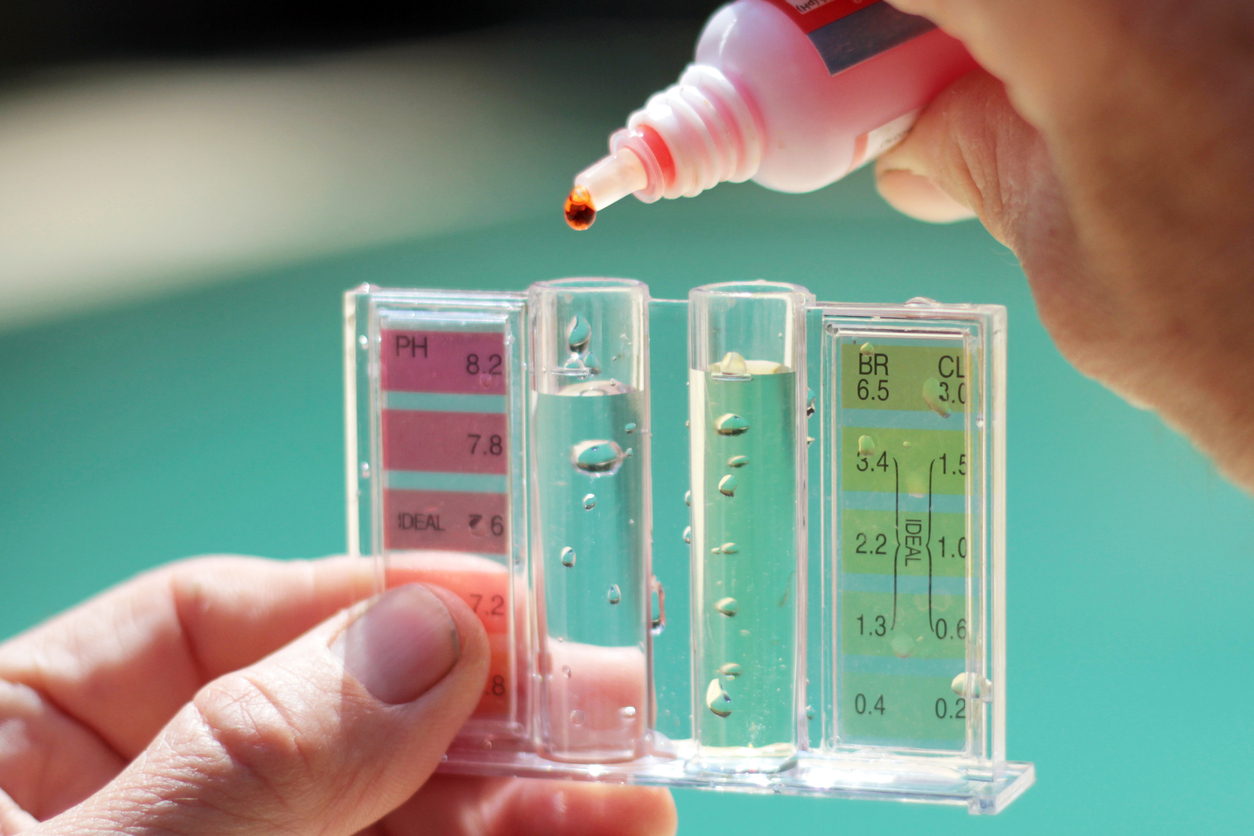
You shocked your pool, the water looked great the next day, and now your chlorine level is low again.
If you’ve ever had that happen, you’re not alone. It’s one of the most common water chemistry problems pool owners face during the hottest weeks of summer. After spending money on chemicals, it’s frustrating to feel like you’re right back where you started.
Fortunately, chlorine almost never disappears without a reason. More often than not, it’s reacting to conditions in your pool that need attention. Understanding those conditions can save you money, prevent unnecessary chemical use, and help you enjoy a cleaner, healthier pool for the rest of the season.
If recurring water problems have become part of your routine, the team at Rose City Pool & Spa can help identify the underlying cause instead of relying on trial and error.
Chlorine Doesn’t Wear Out—It Gets Used Up
One of the biggest misconceptions about chlorine is that it simply fades away over time.
In reality, chlorine is constantly working. It sanitizes your water by attacking bacteria, breaking down organic contaminants, and helping prevent algae from taking hold.
Every swimmer adds sweat, sunscreen, body oils, and other contaminants to the water. Wind carries in pollen, leaves, insects, and dust. Warm temperatures accelerate biological activity, meaning your sanitizer has to work even harder during the middle of summer.
When you shock your pool, you’re giving chlorine enough strength to catch up with that workload. If it disappears unusually quickly afterward, the workload probably hasn’t gone away.
Start by Checking Your Water Balance
Before adding another bag of shock, it’s worth checking the rest of your water chemistry.
One of the first numbers to look at is pH.
As pH rises, chlorine becomes less effective. You may still have sanitizer in the water, but it isn’t working as efficiently as it should. That often leads homeowners to believe they need more chlorine when the real issue is improper water balance.
Total alkalinity also affects how stable your pH remains. When alkalinity drifts outside the recommended range, maintaining balanced water becomes much more difficult.
Correcting these readings first often improves sanitizer performance without adding additional chlorine.
Don’t Ignore Your Filtration System
Chemistry is only part of the equation.
Your filtration system plays an equally important role in maintaining clean water.
When a filter becomes dirty, water circulation slows. Contaminants remain suspended longer, chlorine has to work harder, and maintaining proper sanitizer levels becomes increasingly difficult.
One maintenance habit every pool owner should develop is recording the filter pressure immediately after a thorough cleaning.
That reading becomes your clean baseline.
As dirt accumulates inside the filter, pressure gradually increases. When it’s approximately 8 to 10 PSI above your clean reading—always following your equipment manufacturer’s recommendations—it’s generally time to clean the filter again.
Without that baseline, it’s difficult to know whether your filter is operating efficiently.
If you aren’t sure whether circulation is contributing to the problem, scheduling professional pool service can help identify issues before they become more expensive repairs.
Summer Sun Uses More Chlorine Than You Think
Sunlight naturally breaks chlorine down throughout the day.
That’s why cyanuric acid, commonly called stabilizer, is such an important part of pool chemistry.
Too little stabilizer allows ultraviolet light to consume chlorine rapidly.
Too much stabilizer, however, can reduce chlorine’s effectiveness.
Maintaining the proper balance helps chlorine last longer while still remaining effective at sanitizing your water.
Several Small Problems Can Create One Big Headache
A pool that won’t hold chlorine often isn’t suffering from one major failure.
Instead, several small issues may be occurring at the same time.
For example:
- Water chemistry is slightly out of balance.
- The filter is overdue for cleaning.
- Pump run time is too short.
- Heavy pool use has increased contaminant levels.
- Leaves, pollen, and other debris have accumulated.
- Early algae growth has begun but isn’t yet visible.
Individually, these issues may seem minor.
Together, they can dramatically increase chlorine demand.
Before Buying More Chemicals
Before reaching for another container of shock, work through a few basic maintenance checks.
- Test free chlorine and pH with a reliable test kit.
- Empty skimmer and pump baskets.
- Compare your filter pressure to your clean baseline.
- Brush the pool walls, steps, and floor.
- Make sure return jets have good circulation.
- Look for cloudy water or slippery surfaces that may indicate algae beginning to develop.
These simple inspections often reveal the real source of the problem.
Hot Tubs Can Experience Similar Water Chemistry Problems
If you own a spa as well as a swimming pool, the same principles apply.
Warm water, frequent use, poor circulation, and dirty filters all increase sanitizer demand.
Routine hot tub services help keep your spa’s equipment operating properly while making water chemistry easier to maintain throughout the year.
Know When It’s Time to Ask for Help
If you’ve balanced your water, cleaned the filter, verified circulation, and chlorine still disappears unusually fast, it’s probably time for a more complete inspection.
Continuing to buy chemicals without identifying the real problem often costs more than solving the issue correctly the first time.
Whether the cause is circulation, filtration, equipment performance, or water chemistry, identifying it early usually leads to easier maintenance and lower long-term costs.
If you’re planning seasonal maintenance or need help diagnosing a recurring problem, don’t forget to check our current coupons and specials before scheduling your appointment.
The Bottom Line
A pool that won’t hold chlorine is almost always trying to tell you something.
Rather than treating the symptoms every few days with additional shock, take the time to evaluate the complete system. Healthy water depends on proper chemistry, effective filtration, good circulation, and well-maintained equipment all working together.
When those pieces are in balance, chlorine performs the way it’s supposed to—and your pool becomes much easier to enjoy.